Call for Papers for Two International Conferences: GAIA’S VISCERA: MINING AS A REALITY AND A REPRESENTATION (2027)
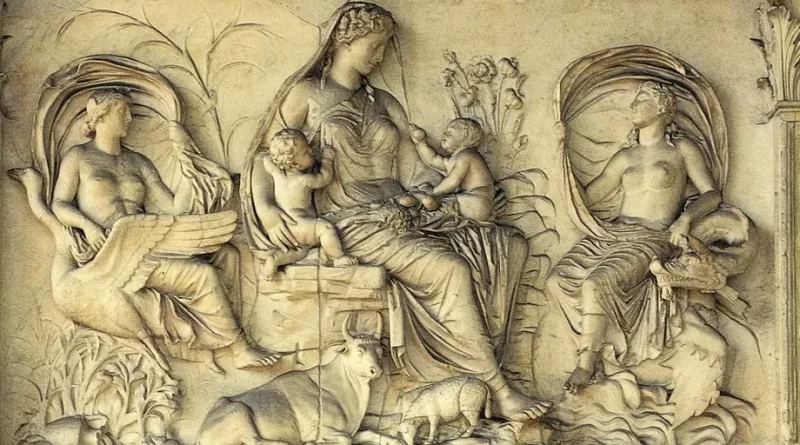
„In exploring Gaia’s thousand guises, one can unfold everything that the notion of Nature had collapsed into a single category: an ethics, a politics, a peculiar conception of the sciences and, above all, an economy, and even a theology.“ Bruno Latour, Face à Gaïa (2015)
Two conferences are planned for 2027 on the realities and representations of mining across the longue durée and in a broad geographical perspective. The first will take place in Amiens from 18 to 20 March. The second, to be held in Lens and Arras from 14 to 16 October, will explore the same themes with a more specific focus on colonisation.
Contributors are therefore invited to choose between the two conferences accordingly. Mining – the human exploitation of the subsoil— has long been regarded as a major geographical, economic, social and cultural resource. Across history, it has generated a wide range of imaginaries and artistic representations. As a driving force in successive technological transformations culminating in the digital age, mining has now become a key site for critical reflection on extractivism. The two interdisciplinary conferences, entitled „Gaia’s viscera: Mining as a reality and a representation“ seek to explore the complex spaces of mining, from open pits to underground shafts and tunnels. Their aim is to challenge often stereotyped representations of the mine by inviting a broad research community to shift perspectives and experiment with different methods. Scholars from all disciplines, including literary studies, linguistics, history, art history, sociology, ethnology, economics, and the study of energies and landscapes are welcome to join this dialogue at a moment when the Anthropocene compels us to rethink extractivism.
From the beginning of the industrial era, the mining of coal (bituminous coal) has been a decisive feature of the economy, society, landscapes, and culture of northern France or what is now called the Hauts-de-France region. Evidence of this can be found in the now-protected heritage sites of the Delloye and Arenberg pits, located in Lewarde and Wallers, between Douai and Valenciennes. The straight-line distance between Arras and these sites is less than fifty kilometres, and less than a hundred for Amiens. The objective of these conferences is to combine this regional integration with the greatest geographical scope, beyond European borders. Soil, subsoil, and extraction rights shape lives worldwide, but they also give rise to deadly and „barbaric“ conflicts, according to Fabien Lebrun. The historical range of the conferences includes pre-industrial and industrial eras from Antiquity, when mythological tales referred to the various ages of Gods and men as metals, up to our current time. Nowadays the large-scale deployment of digital technologies and low-carbon electricity production techniques is driving a global surge in the demand for metals.
The 18th century has established the prevailing idea that the mineral kingdom is not part of the realm of the living. Nevertheless, Diderot and d’Alembert’s Encyclopédie demonstrated that mines are human dwellings, where men and animals perform intense physical labour under conditions that are biologically unfavourable and extremely arduous.
Rousseau was affected by what nature—including human nature—was subjected to deep within the pits. Naturalist novelists and writers such as George Orwell attested to this, and contemporary authors keep on expressing the individual and collective tensions within these environments. Particular attention may be paid to mining as a life experience outside the terrestrial surface biotope, testing the limits of the living. The social life that has sprung from the mines—in housing, schools, and places of leisure—will also be addressed. Another possible exploration could deal with what happens to mines after they close. Examples include German open-cast lignite mines that are „renatured“ into lakes to hide the scars left on the landscape by the extraction of a highly polluting resource combusted in thermal power plants with massive CO2 emissions. Disused mines and their surrounding equipment can become sites of memory for mining labour, evolve into places of cultural production and/or consumption, or of entertainment, including sports facilities such as swimming pools or ice rinks. The subterranean world continues to stimulate our imagination. All forms of conversions, whether for heritage, tourism, or some other purpose, may be studied.
The criticism of extractivism denounces the deleterious effects of mining on the environment and climate, defends indigenous rights against the neo-colonial appropriation of resources, and will be part of research axes of the conference. While the formal status of the Anthropocene remains a debated topic in the field of geology, the link between fossil fuels, including mined coal, and global warming is a scientific consensus. We will thus examine the complex relationships between scientific research, ecological activism, and political (in)action, as well as their reflection in our media and cultural productions. Finally, the appetite for „strategic“ minerals (gold, copper, silver, potash or cryolite, rare metals and uranium) has largely and historically participated in the conquest and colonisation of lands. The mining industry has generated specific representations in colonised spaces; colonial as well as native agents have promoted it for advertising, technical, tourism or political purposes. Our second conference will be devoted to this topic, involving colonial and post-colonial studies and the creation of a shared memory.
Proposed Themes
1. Nature of the metals, ores, minerals, stones, and energy sources extracted
2. Arts and techniques of extraction: history, innovations, successes, and failures
3. Human experience in and around the mines: individuals, communities, and globalisation
4. Landscapes, animals, and the mining environment through history and the Anthropocene
5. Narratives and languages of the mines: literature, arts, cinema, music, games, and Orality
Dates and Locations
• 18 – 20 March 2027 – Université de Picardie Jules Verne, Logis du Roy, Amiens
• 14 – 16 October 2027 – Université d’Artois, Lens, Arras (Colonialism and postcolonialism
approaches, shared memories)
Scientific Committee
• Tina Asmussen, Professor at the Ruhr-Universität Bochum and Chief Researcher at the Deutsches Bergbau-Museum (Germany).
• Yves Bouvier, Professor at the Université de Rouen
• Mirhan Damir, Lecturer, Faculty of Fine Arts, Alexandria University (Egypt).
• Arnaud Huftier, Professor at the Université Polytechnique Hauts-de-France.
• Leonor A. Plácido de Medeiros, Assistant Professor, Faculdade de Ciências Sociais eHumanas, Universidade NOVA de Lisboa (Portugal).
• Virginie Malolepszy, Director of Archives at the Centre historique minier, Lewarde.
• Marie-Françoise Montaubin, Professor at the Université de Picardie Jules Verne.
• Massimo Preite, Professor emeritus at the Università degli Studi di Firenze (Italy).
Submission of Proposals
Proposals (title, abstract of up to 400 words, and a short biobibliographical note) must be
uploaded via https://mines.sciencesconf.org by 15 June 2026. Decisions by the scientific
committee will be communicated in October 2026.
Communication languages
Both English and French may be spoken at the conference.
Registration Fees
A Registration fee of €50 is payable by tenured academics. Participants are encouraged to seek travel and accommodation funding from their home institutions, although limited support may be available on a case-by-case basis.
Organizers
• Clémence Couturier-Heinrich and Catherine Grall, Université de Picardie Jules Verne,CERCLL• Florence Hachez-Leroy, Université d’Artois, CREHS
Partner institutions
• Centre historique minier, Lewarde [Lewarde Historic Mining Centre]• Université Polytechnique Hauts-de-France [Polytechnic University of Hauts-de-France]• CILAC – Comité d’information et de liaison pour l’archéologie, l’étude et la mise en valeur du patrimoine industriel [Information and Liaison Committee for Archaeology, Study and Enhancement of Industrial Heritage] CILAC-TICCIH France
Contact
• clemence.couturier-heinrich@u-picardie.fr
• catherine.grall@u-picardie.fr
• florence.hachezleroy@univ-artois.fr